



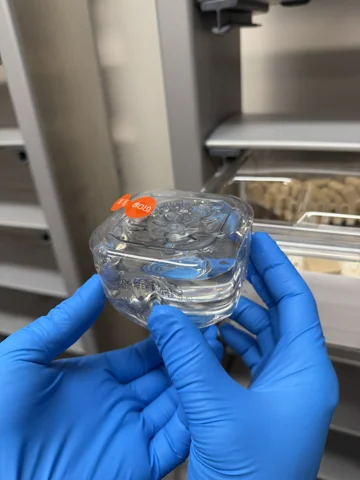
Pharmacokinetic studies examine exposure, distribution, metabolism and elimination in the selected model. Route, formulation, sampling and analytical methods are planned together. Interpretation considers the species, test article and study conditions when informing the next development decision.
PK data can inform candidate comparisons, formulation choices, dosing schedules and further research. Parameters such as bioavailability and half-life are interpreted with the assay, sampling design and model in view.
Our Available Routes of Administration: We offer a range of delivery methods tailored to your specific research needs, each selected based on the pharmacological profile of the drug being studied. These include:
- Intraperitoneal (IP): Systemic administration with absorption that depends on the compound, formulation and study conditions.
- Intravenous (IV): Involves administering a substance directly into the bloodstream through a vein, typically the tail vein due to its accessibility.
- Subcutaneous (SC): Administration into subcutaneous tissue, with the injection site and procedure defined in the protocol.
- Intranasal (IN): Intranasal delivery is a common, minimally invasive method used to administer drugs directly into the nasal cavity so they can be absorbed through the nasal mucosa and, in some cases, reach the CNS via olfactory/trigeminal pathways.
- Oral Gavage (OG): Oral gavage involves passage of a gavage needle into the esophagus to administer liquid compounds to the stomachs of rodents
- Intracardiac (IC): A specialized administration route considered for appropriate study applications under an agreed protocol.
- Hepatic portal (HP): Administration into the portal circulation for a study-specific liver or disposition question.
- Hydrodynamic tail vein injection (HDTV): A specialized tail-vein delivery approach. Feasibility, test-article requirements and welfare provisions are defined for the individual study.
- Intra Articular (IA): A technique used to deliver substances directly into a joint space, typically for research involving arthritis, osteoarthritis, inflammatory joint diseases, or drug testing.
Metabolic Profiling and In-Depth Analysis
Metabolic cages can support planned urine and feces collection. Blood sampling and tissue collection are separate protocol-defined procedures. Samples can be analyzed by the client’s chosen laboratory or a specialist partner, using methods such as LC-MS/MS where suitable for the analyte and matrix.
The key metabolic metrics evaluated include:
- Plasma Concentration-Time Curve: This measures the concentration of the drug in the bloodstream over time, providing insights into its absorption, distribution, and elimination kinetics.
- Clearance, Half-Life and Volume of Distribution: Parameters that describe elimination and distribution and help inform dose and sampling plans.
- Oral Bioavailability: By measuring the fraction of the drug that reaches the systemic circulation when taken orally, we assess its suitability for oral administration versus other methods.
- Blood-Brain Barrier Penetration: Brain and plasma exposure measurements can inform CNS distribution, interpreted alongside the sample matrix, collection method and study context.
- Protein Binding: Measurement of binding to plasma proteins can inform interpretation of the unbound fraction and exposure.
- Exposure and disposition data help teams compare candidate profiles, identify remaining questions and plan the next development stage. The model, method performance and limitations remain part of the interpretation.
Supporting In Vivo Pharmacology and Drug Optimization
In vivo pharmacokinetic studies serve not only to understand how a drug behaves within the body but also to support in vivo pharmacology, which is crucial for assessing the therapeutic effects of a drug. By combining PK data with pharmacodynamic (PD) measurements, such as the drug's effect on biological systems, we can establish a robust correlation between drug concentration and its physiological outcomes. This helps researchers understand the relationship between the drug’s presence in the body and its functional response, providing valuable insights into its mechanism of action.
PK and PD measurements can help interpret exposure-response relationships and compare candidate profiles. They inform further experiments, with the model, assay performance and limits of extrapolation considered in the study report.