

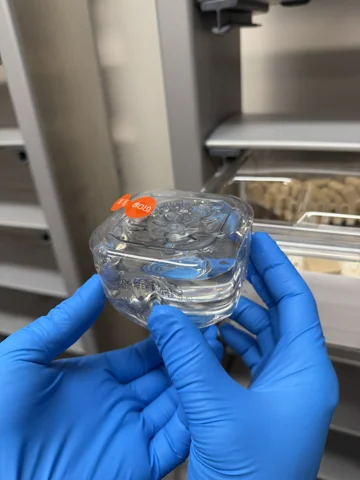
Human cell models within a NAM-informed plan.
Our iPSC and cell-culture capabilities provide a basis for human-relevant, non-animal research. We are working to connect suitable NAMs with animal models where needed, with readiness, controls and the intended use agreed for each study.
Our approach to NAMs and the 3RsBuild the assay around the decision.
Use in vitro and tissue-based assays to investigate biological activity, characterize samples and interpret findings from animal studies. MuriPhys works with your team to define the target, sample matrix, controls, method and data outputs.
Core assay capabilities
| Method | Research applications | Study-planning inputs |
|---|---|---|
| ELISA | Protein, biomarker and other immunoassay readouts in suitable samples. | Analyte, matrix, sample volume, calibration range and controls. |
| PCR | Nucleic-acid analysis using a method selected for the study objective. | Target sequence, extraction method, primers, controls and required output. |
| Immunohistochemistry (IHC) | Protein localization and tissue-based characterization. | Tissue preparation, fixation, antibodies, controls, staining and scoring plan. |
| Cell-based studies | Biological activity and study-specific responses in relevant cell systems. | Cell model, treatment conditions, controls, endpoints and assay readiness. |
| ddPCR | Study-specific nucleic-acid quantification. | Target, matrix, extraction, controls and assay readiness. |
| Immunofluorescence | Tissue localization and expression readouts. | Specimen preparation, labeling, imaging and analysis plan. |
Development, transfer and sample analysis
An established assay, a transferred client protocol and a new method require different scopes. We define the work needed to establish readiness before routine sample analysis begins.
- Review available protocols, reagents and reference materials.
- Agree on assay development or transfer activities where needed.
- Set study-appropriate controls and acceptance criteria.
- Plan sample collection, storage, shipping and analysis together.
- Provide the agreed data, analysis and method documentation.
Connect the tissue to the in-life findings.
Plan tissue collection and processing alongside dosing and functional assessments. This helps the laboratory readouts address the same biological question as the animal study.
For exposure and distribution questions, we can also coordinate bioanalytical support with the in vivo work.
Brain microdissection and regional tissue analysis
Connect anatomically defined brain tissue collection with PCR, ELISA and other study-appropriate analyses. Plan the sample preparation alongside CNS delivery and the intended endpoint. Explore brain microdissection services.